UNIBA Surakarta appreciates the historical heritage and spirituality of Ki Ageng Henis through a book by Dr. Supawi Pawenang
· By Dinny
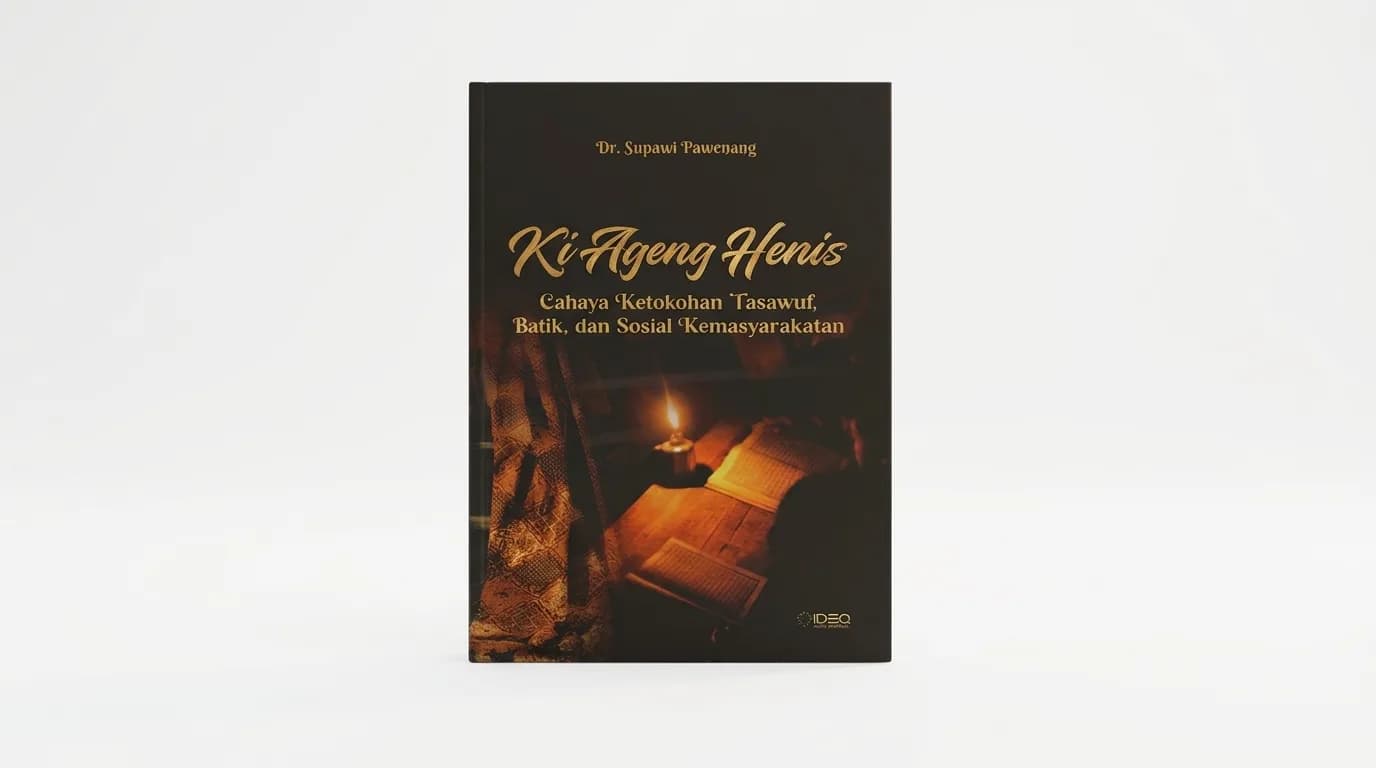
Universitas Islam Batik (UNIBA) Surakarta has published a book by Dr. Supawi Pawenang titled Ki Ageng Henis: The Light of a Leading Figure in Sufism, Batik, and Social and Community Life as an expression of its commitment to preserving the noble values of Surakarta's history and local culture. The book examines Ki Ageng Henis's prominence as a figure who spread Islam through Sufism and pioneered the Laweyan batik tradition, and who developed an interdisciplinary synthesis of Islamic spirituality, Javanese cultural wisdom, education, and social and economic life. For UNIBA, the values of tawhid, noble character, and work ethic passed down by Ki Ageng Henis, with support from various academic, religious, and cultural figures, are a source of inspiration and a main foundation for building the character of a higher education institution that is academically excellent, culturally rooted, and spiritually grounded.
SURAKARTA – Universitas Islam Batik (UNIBA) Surakarta continues to demonstrate its commitment to exploring, appreciating, and preserving the noble values of history and local culture that are relevant to people's lives today. One manifestation of this commitment is the publication of a book titled Ki Ageng Henis: The Light of a Leading Figure in Sufism, Batik, and Social and Community Life, by Dr. Supawi Pawenang, a lecturer and Vice Rector III at UNIBA Surakarta.
This book presents again the figure of Ki Ageng Henis, an important figure in the history of the development of Islam and Javanese culture, especially in Surakarta. Ki Ageng Henis is one of the historical and civilisational assets of the city of Surakarta. Besides being known as a figure who spread Islamic teachings through a Sufi approach, he also held an important position in the genealogical line of the ancestors of the Mataram kings in Java.
The historical trace of Ki Ageng Henis cannot be separated from the Laweyan area of Surakarta. He is known as a figure who introduced and developed the batik tradition in the Laweyan community. In the course of its history, batik developed as an art form and cultural product, and also became a medium for conveying life values. Through a Sufi approach, Islamic teachings were grounded in the daily activities of the community, including creating works, interacting socially, building a work ethic, and living in society.
Thus, the legacy of Ki Ageng Henis shows an interesting blend of Islamic spirituality, Javanese cultural wisdom, and the social and economic life of the community. Sufism did not stop at conceptual understanding or ritual practice alone; it was implemented in daily behaviour. The values of tawhid, purity of heart, sincerity, simplicity, harmony, and noble character became the foundation for building a meaningful life. These values continue to live and be passed down from generation to generation, including through the Laweyan batik tradition, which remains an important part of Surakarta's cultural identity.
Exploring the synthesis of Islam, culture, and social life
This book is a development of the earlier work titled The Sufism of Ki Ageng Henis. Whereas the earlier work focused more on the dimension of Sufism and Ki Ageng Henis's personal spirituality, the new book offers a broader discussion by integrating aspects of history, anthropology, Islamic studies, education, batik art, and social and community life.
Through an interdisciplinary approach, the author seeks to present a more complete picture of Ki Ageng Henis's prominence as a figure who played a role in building a synthesis of Islamic-Javanese culture. He is regarded as a spiritual figure, an educator, a shaper of community character, and a figure able to present Islamic teachings contextually amid the social and cultural life of the Javanese community.
The book is arranged in seven main parts. The discussion begins with Ki Ageng Selo as the figure who laid the foundation for Ki Ageng Henis's scholarship and spirituality, followed by the concept of the self, the philosophy and spirituality of batik, the implementation of educational concepts, the Sufism of the self, friendship with Sultan Hadiwijaya, and the influence and continuity of Ki Ageng Henis's legacy as a leading figure to the present day.
One of the interesting discussions in this book is the connection between Sufism and the philosophy of Laweyan batik. Batik motifs, lines, and colours are understood as elements of visual beauty and also carry a symbolic dimension related to the human spiritual journey, self-awareness, harmony with nature, and the human relationship with Allah Subhanahu wa Ta'ala. This perspective shows how Islamic values can be actualised through art, tradition, and the economic activities of the community.
Ki Ageng Henis and the noble values of UNIBA Surakarta
For UNIBA Surakarta, exploring the history and thought of Ki Ageng Henis has a broader meaning than an effort simply to document history. Ki Ageng Henis is part of Surakarta's civilisational heritage, whose values deserve to be appreciated, studied, and used as a source of inspiration for building the character of today's generation.
As a higher education institution that grew and developed in Surakarta with an Islamic identity and batik culture, UNIBA considers that the noble values passed down by Ki Ageng Henis are relevant to the institution's identity and direction of development. The combination of Islamic spirituality, noble character, local wisdom, character education, creativity, work ethic, and social concern is a set of values that are important to keep alive in the academic environment and in social life.
In this context, UNIBA sees batik as a visual identity or cultural symbol and also as a heritage of values and a philosophy of life. The Islamic spirit combined with local culture is one of the historical riches that can strengthen UNIBA's character as a higher education institution that develops knowledge while remaining grounded in moral, spiritual, and cultural wisdom.
Appreciation of Ki Ageng Henis's history is also a reminder that the development of higher education cannot be separated from the historical and cultural roots of the community in which the institution grows. Therefore, recognising and emulating the noble values of predecessors is part of the effort to build an institutional identity that has character, is cultured, and makes a real contribution to civilisation.
Making history a source of inspiration for future generations
Through this book, Dr. Supawi Pawenang hopes that the public, especially the younger generation, can become better acquainted with Ki Ageng Henis and his legacy of thought and contribution to the development of Islam and Javanese culture. This study is also expected to become a reference for academics, students, historians, santri, cultural figures, and the wider public with an interest in the history of Islam in the archipelago.
The writing of this book also received support and input from a number of figures, including KH. Ahmad Darwis Tohari, a descendant of Ki Ageng Henis and caretaker of Pondok Pesantren Darul Muta'allimin Kertosono; KH. Ipmawan Muhammad Iqbal, Rector of UNIBA Surakarta and Chairman of the Takmir of Masjid Laweyan; Datuk Haji Mohd Asyaharim Bin Datuk Haji Abdul Latiff Mirasa, CEO of Yayasan Restu Malaysia and Head of Nasyrul Qur'an; and Ir. Alpha Fabela Priyatmono, owner of Batik Mahkota, who also provided insight into the history and dynamics of Laweyan batik culture.
Ultimately, the book Ki Ageng Henis: The Light of a Leading Figure in Sufism, Batik, and Social and Community Life does more than invite readers to remember the past; it invites the community to rediscover noble values that can be applied in life today. History is meant to be known, understood, internalised, and passed on.
For UNIBA Surakarta, appreciating Ki Ageng Henis means helping to safeguard the chain of history, spirituality, and culture that has shaped the character of Surakarta's people. This legacy is expected to remain a source of inspiration for UNIBA in developing higher education that is academically excellent, courteous in conduct, strong in spirituality, and rooted in the nobility of the nation's culture.